
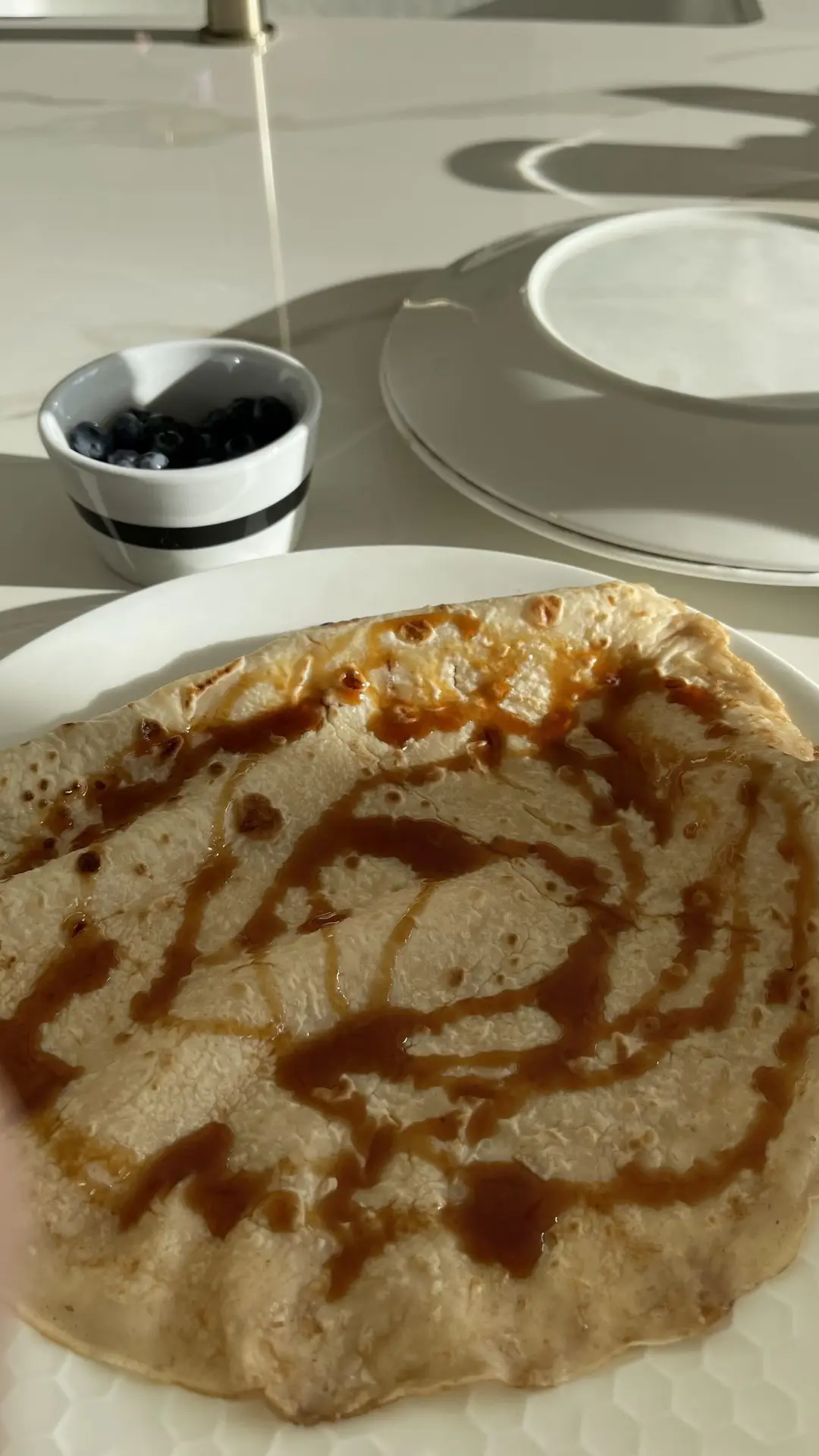
The Dutch “pannenkoek” is popular and tasty. It’s best eaten with real “stroop” from Holland. A key reason for the lasting popularity of the Dutch pannenkoek is its versatility. Unlike thinner French crêpes or fluffy American pancakes, Dutch pannenkoeken are large and filling, making them suitable for both sweet toppings (stroop, sugar, apples) and savory additions (cheese, bacon). This flexibility helped them remain relevant across generations.
Today, pannenkoeken are firmly embedded in Dutch food culture. They are associated with childhood, family gatherings, and casual restaurants. While ingredients and toppings have expanded, the basic idea remains unchanged: a simple, satisfying dish that brings people together.
In short, the Dutch pannenkoek became popular not through luxury or fashion, but through practicality, adaptability, and tradition—qualities that still define it today.