
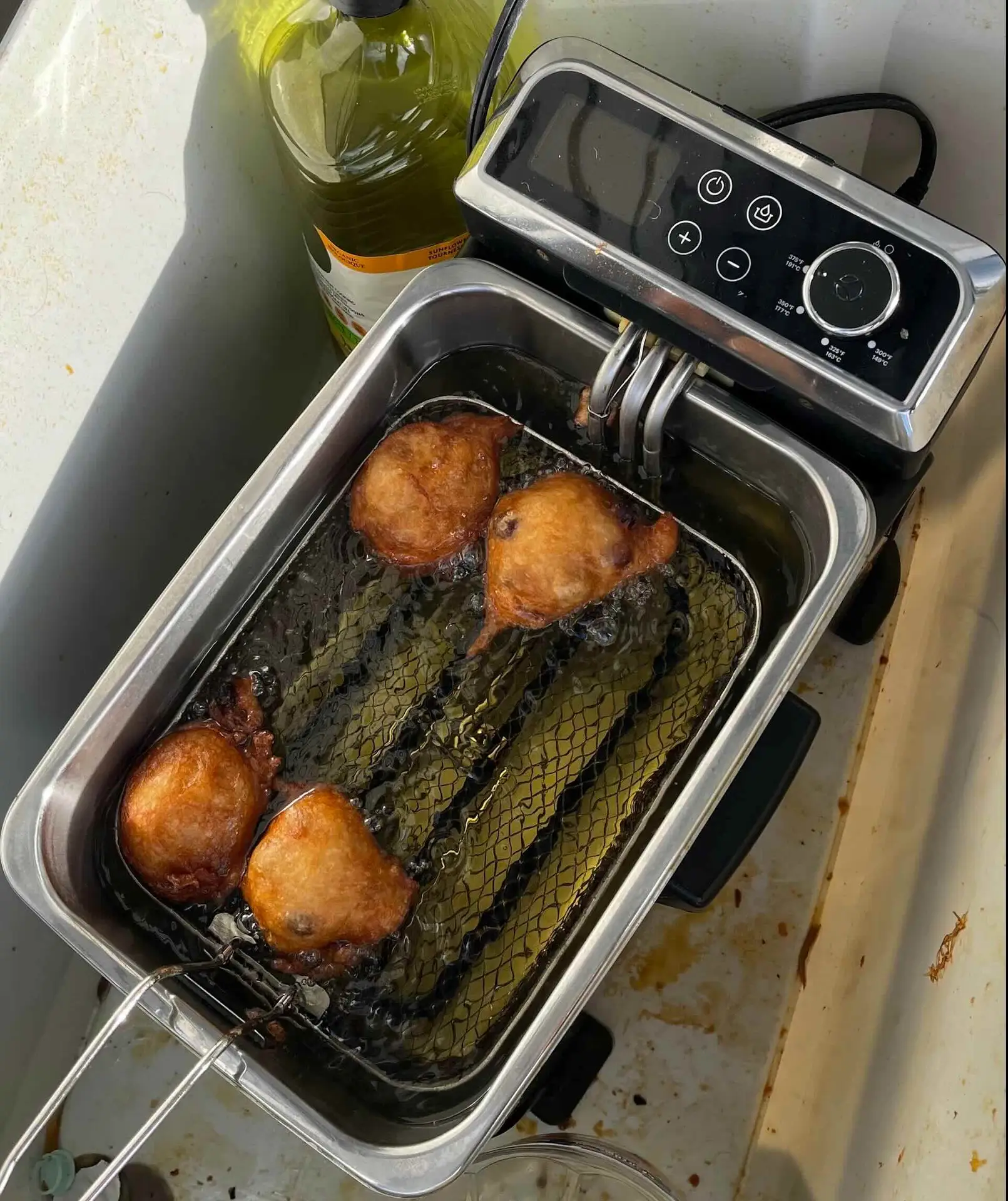
On the last days of the year, when the light hangs low over the canals and the air smells faintly of smoke and frost, the Netherlands turns its attention to a simple, stubbornly enduring tradition: the eating of oliebollen.
In kitchens across the country, a quiet transformation begins. Flour is measured, yeast stirred into lukewarm milk, and raisins folded in with a care that has been learned rather than taught. The batter rests beneath a cloth, rising slowly as if gathering strength for the night ahead. Outside, bicycles rattle past temporary stalls where oil is already heating, its surface shimmering in the cold. These stalls appear every December, as predictable as the shortening days, and disappear just as quietly in January.
The ritual has little to do with haste. Oliebollen are not eaten on the run. They demand patience: waiting for the oil to reach the right temperature, watching each ball of dough sink and then resurface, turning golden and uneven. Perfection is not the goal. In fact, the irregular shape is part of the appeal. Each oliebol carries the mark of the hand that made it.
As evening approaches on New Year’s Eve, plates are stacked higher. A light snowfall may begin, or a cold rain, but inside the house the windows fog and conversation drifts easily. Someone sifts powdered sugar over the warm oliebollen, the white dust settling into cracks and folds. The first bite is always careful; the inside is hotter than expected. Steam escapes, and for a moment the world contracts to warmth, sweetness, and oil.
Stories surface along with the food. Parents recall winters from decades past, when oil was scarce or when queues at the stall stretched halfway down the street. Children listen, half-interested, half-focused on claiming the last one from the plate. The tradition persists not because it is explained, but because it is repeated.
At midnight, fireworks fracture the sky and echoes roll between houses. Glasses are raised, wishes exchanged. The oliebollen, now slightly cooled, remain on the table—no longer the center of attention, but still present. They have done their work. They have marked the passage from one year to the next, not with ceremony or grandeur, but with something warm, familiar, and shared.
When January comes, the stalls vanish, the oil is put away, and the tradition recedes into memory. Yet everyone knows it will return. Next winter, once again, dough will rise, oil will hiss, and the Netherlands will quietly agree that the year cannot end without oliebollen.