Laugh at the differences, learn the rules, and survive Canadian politeness.
Short stories about culture shocks + checklists and tips for Dutch people moving to Canada.

There was a time when the Netherlands had everything going for it: bicycles, stroopwafels, and a national talent for scheduling meetings three months in advance. But times change. And nowadays, if one compares daily life with a straight face, Canada starts to look suspiciously attractive.
So yes, Canada has bears, snow, and distances that require snacks. But it also has room—for people, for plans, and for breathing.
And these days, that feels like a very compelling upgrade.
Learning Canadian Habits: A Dutch Perspective on Starting Life Abroad
When Dutch people prepare to relocate to Canada, the practical steps—visas, housing, employment—often receive the most attention. Yet, once the move is underway, it is the everyday habits and social norms that shape how quickly newcomers feel at ease. For many from the Netherlands, adapting to Canadian habits requires small but meaningful adjustments in communication, social behavior, and daily routines.
Examples

Communication style
One of the first differences Dutch newcomers notice is communication style. In the Netherlands, directness is widely accepted and often appreciated as a sign of honesty. In Canada, communication tends to be more indirect and carefully phrased. Politeness plays a central role, and expressions such as “sorry,” “please,” and “thank you” are used frequently, even in minor interactions. Dutch migrants often learn that softening criticism or requests helps avoid misunderstandings and fosters smoother social and professional relationships.

Social interaction
Social interaction also feels different. Canadians are generally friendly and approachable, yet more reserved when it comes to personal matters. While casual conversations with neighbors or colleagues are common, deeper friendships may develop more slowly than Dutch newcomers expect. Learning to respect personal boundaries—while remaining open and courteous—becomes an important part of social integration.
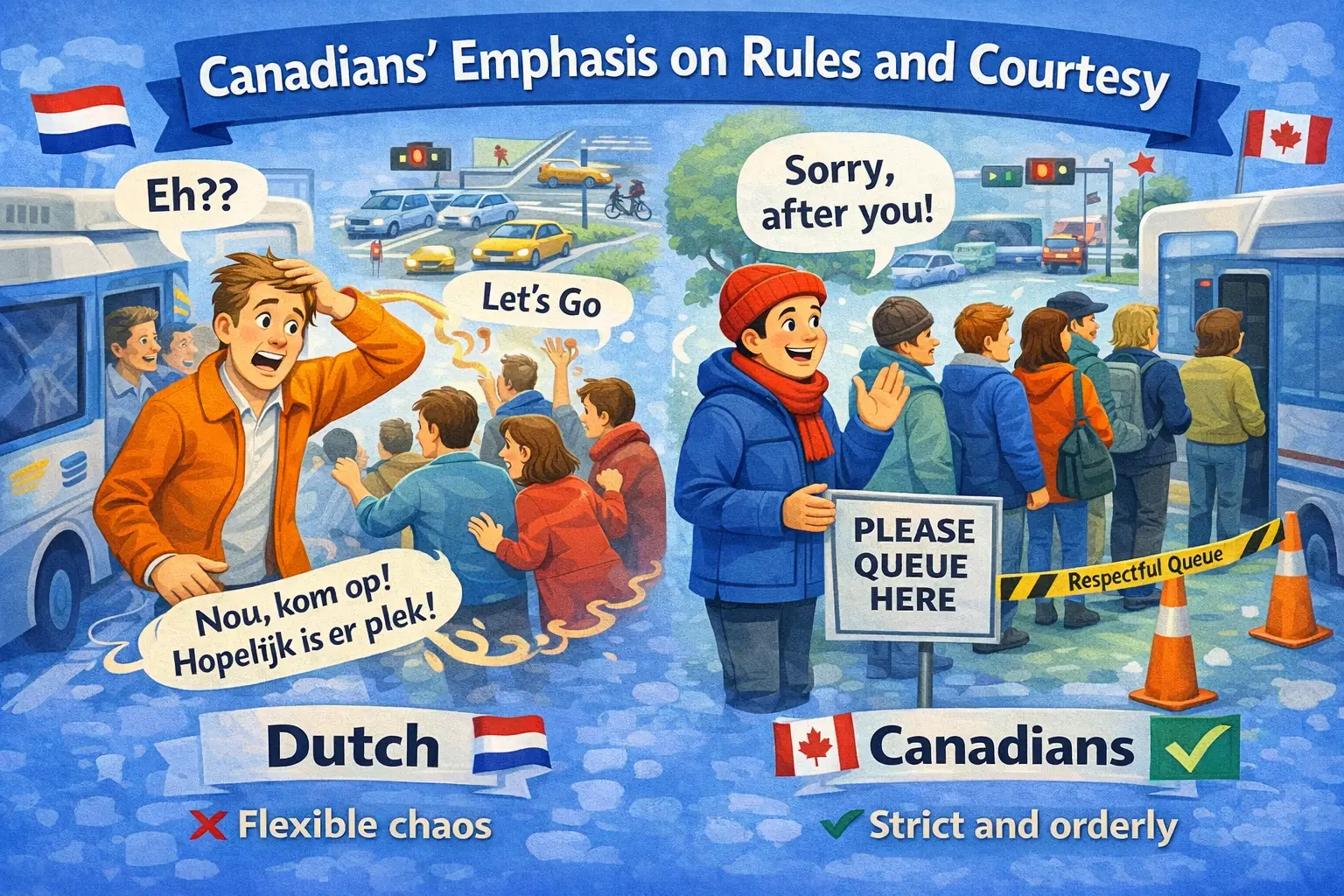
Rules and courtesy in shared spaces
Another area of adjustment is the strong emphasis on rules and courtesy in shared spaces. Canadians tend to follow queues strictly, respect personal space, and adhere closely to regulations, whether in traffic, public transport, or the workplace. For Dutch people, who are accustomed to informal consensus-building and pragmatic flexibility, this can feel overly structured at first. Over time, however, many come to appreciate the predictability and mutual respect this system creates.
Developing cultural flexibility
Ultimately, learning Canadian habits is not about abandoning Dutch identity but about developing cultural flexibility. By observing, listening, and gradually adapting, Dutch people moving to Canada often find that these differences enrich their experience. The process takes time, but it also offers an opportunity to combine the strengths of both cultures into a new and balanced way of living.